






Offer

 Nicolaus Copernicus University in Toruń
Ludwik Rydygier Collegium Medicum in Bydgoszcz
Department of Laser Therapy and Physiotherapy
Acting Head: Małgorzata Łukowicz, MD, PhD
„Assessment of skin temperature changes in the lower limbs after using Piokal biothermal insoles”
Małgorzata Łukowicz, Magdalena Weber-Zimmermann, Katarzyna Ciechanowska, Paweł Zalewski, Justyna Szymańska, Agnieszka Pawlak, Jan Pawlikowski
Keywords: thermal stimulus, microcirculation, skin temperature measurement
Key words: thermal factor, microcirculation, skin temperature measure
Nicolaus Copernicus University in Toruń
Ludwik Rydygier Collegium Medicum in Bydgoszcz
Department of Laser Therapy and Physiotherapy
ul. M. Skłodowskiej-Curie 9, 85-094 Bydgoszcz, Poland
tel. +48 52 585-34-85, e-mail: [email protected]
Abstract. Low-intensity, long-acting thermal stimuli improve circulation through thermoregulatory mechanisms: blood vessels dilate – arterioles, capillaries and veins of the skin and subcutaneous tissue – and capillaries that are inactive at normal temperature open up. These changes cause a significant increase in blood supply to the skin. Diffusion through the capillary walls increases and metabolism improves. This stimulates the parasympathetic part of the nervous system, which influences the functioning of internal organs and the cardiorespiratory system, and also gives a sense of well-being and relaxation. A small amount of supplied heat stimulates immune responses, too much inhibits them. The aim of the study was to assess changes in skin temperature at selected points on the foot, lower leg and thigh after using heat-shielding thermal insoles. The study was carried out in three groups of patients – healthy people, people after spinal cord injury and people with peripheral circulation disorders – compared with a control group (placebo). Positive results were obtained in the form of a temperature increase at the examined points, especially in healthy people compared with the placebo group, and to a lesser extent in the other groups. Among the subjective effects, patients with diabetes reported a feeling of „warm feet’; in all groups except placebo, most patients reported a feeling of warmth or possibly tingling.
Sumary Thermal low-intense stimulus but persistent thought thermoregulation influences blood circulation, it causes dilatation of blood vessels; arterial capillary, arteriole, skin and sub skin veins, opening of closed in normal circumstances capillaries. It causes a local skin congestion. A metabolism and a diffusion thought capillaries increases. It stimulate parasympathetic nervous system, that influence internal organs and a circulatory system, it also causes relaxation and good mood. A little amount of heat stimulate immunological reactions, to much heat inhibits. The aim of this work was to evaluate the fluctuations of skin temperature in few points of foot, shank and thigh after biothermal inlay application. This biothermal inlay has a specific screen property. The test were conducted in four group of subjects: healthy, paraplegic and tetraplegic, with circulatory problems in lower limbs and placebo. We observed the increase in skin temperature in all groups, specially in healthy subjects but in other groups as well except placebo. Among subjective effects we noticed “warm leg sign”, specially in subjects with diabetes, sometimes tingling, a lot of subjects felt gently warm.
Introduction
Used as shoe insoles, biothermal insoles shield the thermal energy of our feet. By reflecting heat rather than dissipating it, they influence the body's thermoregulation processes, mainly through the effect of temperature on microcirculation. The insoles are designed to raise body temperature and improve blood circulation. As a result of the interaction between the foot and the screen, after some time (5 to 15 minutes) the patient subjectively feels a warming effect, sometimes a „tingling” effect. The insoles provide a thermal stimulus of low intensity and long duration [1].
Research carried out at the Laboratory of Biotronics and Electrophotography in Kielce showed that, owing to the material they are made of, the insoles have specific properties that stimulate the body's energy field (Fig. 1). The direction of changes in these fields depends on the individual characteristics of the subjects; about 80% of them responded positively to the stimulation. This was shown by the enlargement and filling of the energy fields of the feet [2].
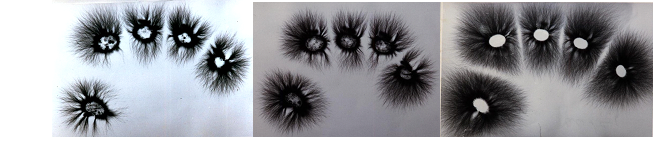
Fig. 1. Assessment of the energy field of the toes a) after 15 minutes on felt, b) after 15 minutes on a rubber insole, 3) after 15 minutes on a thermal insole (courtesy of PIOKAL).
Through the reflected thermal energy, these insoles have a positive effect on the receptors of the feet (Fig. 2).
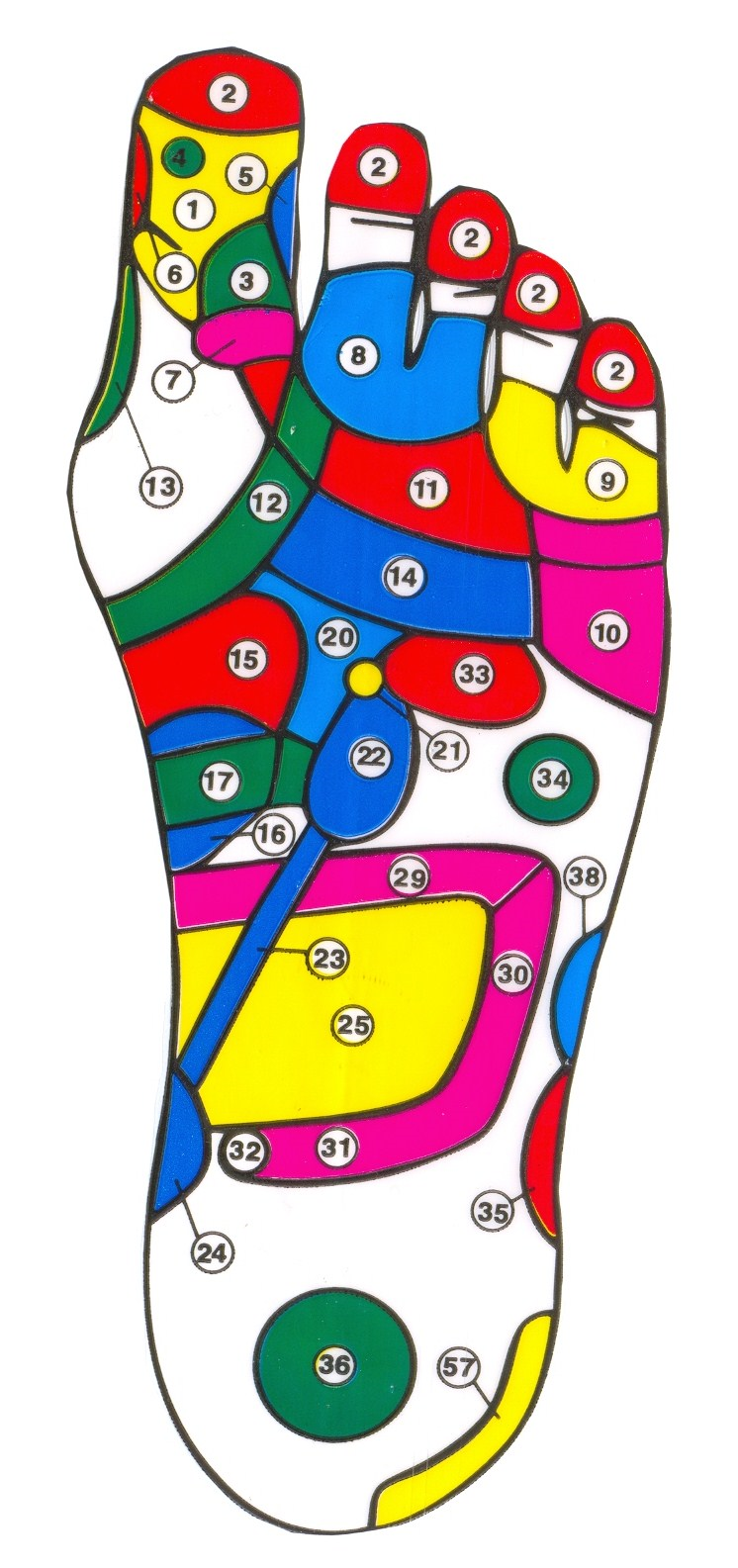
Fig. 2. Receptors of the left foot (with the permission of PIOKAL)
Aim
After analysing the literature on supporting and influencing the body's thermoregulatory mechanisms with physical therapeutic agents, the research team assumed that the research project should answer the following questions:
- Does the use of Piokal thermal insoles affect changes in temperature
in the lower limbs, measured at specific points? - If thermal insoles affect thermoregulation mechanisms in the lower limbs, does the change in temperature depend on the disease?
Material and methods
The study of the effect of thermal foot insoles (Fig. 3) on the skin temperature of the lower limbs was carried out at the Department of Laser Therapy and Physiotherapy, CM UMK in Bydgoszcz.
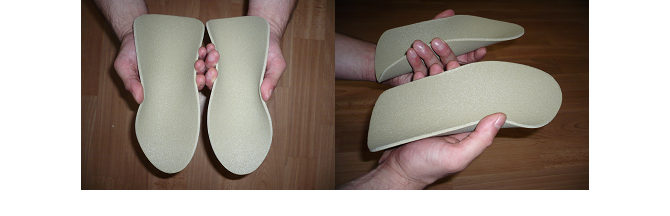
Fig. 3. Piokal thermal insoles
The study material consisted of four groups: three study groups and one control group – placebo. The study groups were as follows:
- group I (study) – consisted exclusively of healthy people who reported no chronic health complaints
- group II (study) – consisted of patients of the Outpatient Rehabilitation Clinic and the Rehabilitation Clinic of the UMK University Hospital in Bydgoszcz; they were treated for chronic dysfunctions of the spinal cord and lower spine of various aetiologies, with sensory and circulatory disorders in the lower limbs.
- group III (study) – also consisted of patients of the Outpatient Rehabilitation Clinic of the UMK University Hospital in Bydgoszcz, with chronic peripheral circulatory insufficiency in the lower limbs
- control group (placebo) – like study group I, consisted exclusively
of healthy people, but in this group placebo insoles were used instead of the therapeutic ones
The study method was based on measuring skin surface temperature at precisely defined points of the body. In each study group and in the placebo group, the same measurement points were always used.
The following measurement points on the skin surface were selected:
- the dorsal surface of the foot, just above the dorsalis pedis artery;
- the lateral and medial heads of the gastrocnemius muscle;
- 15 cm above the knee joint, over the rectus femoris muscle.
Measurements were taken on both sides using a Raytek laser thermometer. They were taken in an environment with a constant temperature to rule out the influence of the ambient temperature on thermoregulation. Measurements were taken before putting on the therapeutic insoles; the insoles were then worn for approx. 30–40 minutes, after which another measurement was taken and recorded in the results table. Therapeutic insoles were used in the study groups, while the placebo group used insoles of identical appearance but made of a neutral material. All insoles were covered with the same fabric.
Results
The results obtained in the individual groups are presented in Tables I, II, III and IV. Measurements taken in healthy subjects are shown in Table I.
Table I. Measurement results obtained in study group I.
anatomical location of the measurement point | number of temperature measurements – n | mean temp. before using the insoles – o C | mean temp. after 30–40 min – o C | mean temp. change – o C |
|---|---|---|---|---|
dorsal surface of the foot | 100 | 32,47 | 33,69 | 1,22 |
medial head | 100 | 32,82 | 33,50 | 0,68 |
lateral head | 100 | 32,76 | 33,46 | 0,70 |
15 cm above the knee joint | 100 | 33,03 | 33,35 | 0,32 |
In the first group of healthy subjects without sensory or peripheral circulation disorders, skin temperature increased at all examined points, especially on the foot and lower leg. These subjects reported a subjective feeling of warmth approximately 5–10 minutes after putting on the insoles, sometimes tingling and heaviness in the feet.
Table 2 contains measurements taken in patients with spinal cord injury:
Table II. Measurement results obtained in study group II.
anatomical location of the measurement point | number of temperature measurements – n | mean temp. before using the insoles – o C | mean temp. after 30–40 min – o C | mean temp. change – o C |
|---|---|---|---|---|
dorsal surface of the foot | 50 | 31,86 | 32,55 | 0,68 |
medial head | 50 | 33,77 | 34,31 | 0,53 |
lateral head | 50 | 33,72 | 34,26 | 0,54 |
15 cm above the knee joint | 50 | 33,28 | 33,50 | 0,22 |
In the group of patients after spinal cord injury, with sensory and circulatory disorders in the lower limbs due to neurogenic disorders, a temperature increase was also observed at all examined points – smaller than in the healthy group, but proportionally comparable. Because of their sensory disorders, these patients did not report subjective sensations.
Table III contains measurements taken in patients with peripheral circulation disorders in the lower limbs.
Table III. Measurement results obtained in study group III.
anatomical location of the measurement point | number of temperature measurements – n | mean temp. before using the insoles – o C | mean temp. after 30–40 min – o C | mean temp. change – o C |
|---|---|---|---|---|
dorsal surface of the foot | 35 | 29,93 | 30,32 | 0,39 |
medial head | 35 | 30,02 | 30,61 | 0,41 |
lateral head | 35 | 30,14 | 30,59 | 0,46 |
15 cm above the knee joint | 35 | 30,37 | 30,48 | 0,11 |
The measurements also showed a proportional increase in skin surface temperature at all points, although these changes were smaller owing to impaired peripheral circulation and, consequently, disturbed thermoregulation mechanisms.
Table IV shows skin temperature measurements after putting on placebo insoles – rubber covered with fabric.
Table IV. Measurement results obtained in the placebo group.
anatomical location of the measurement point | number of temperature measurements – n | mean temp. before using the insoles – o C | mean temp. after 30–40 min – o C | mean temp. change – o C |
|---|---|---|---|---|
dorsal surface of the foot | 53 | 31,21 | 31,43 | 0,22 |
medial head | 53 | 32,42 | 32,56 | 0,15 |
lateral head | 53 | 32,69 | 32,89 | 0,20 |
15 cm above the knee joint | 53 | 32,31 | 32,34 | 0,03 |
The charts below present a comparative analysis of the measurements obtained at the individual points. They show the mean temperature change at a given measurement point in the individual groups – [o C], Figs. 4, 5, 6, 7.
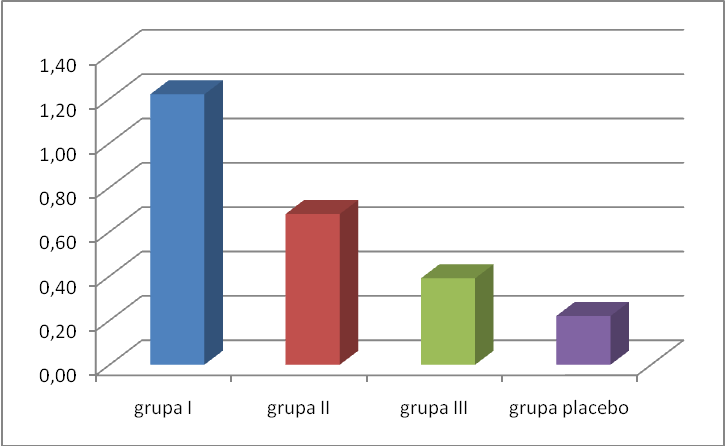
Fig. 4. Mean temperature change in all study groups and the placebo group on the dorsal surface of the foot.
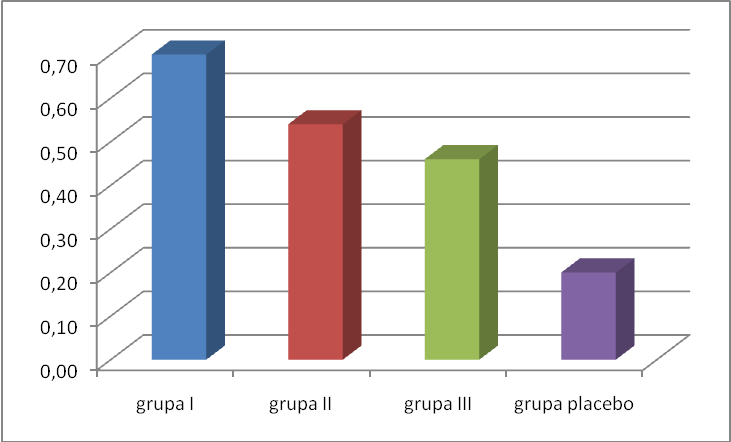
Fig. 5. Mean temperature change in all study groups and the placebo group over the lateral head of the gastrocnemius muscle.
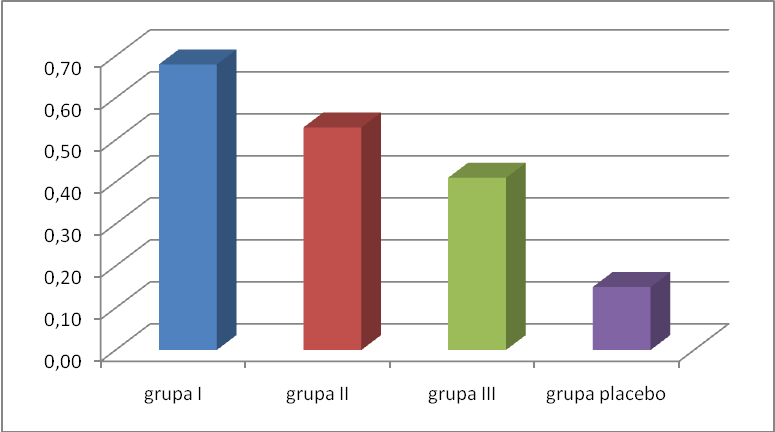
Fig. 6. Mean temperature change in all study groups and the placebo group over the medial head of the gastrocnemius muscle.
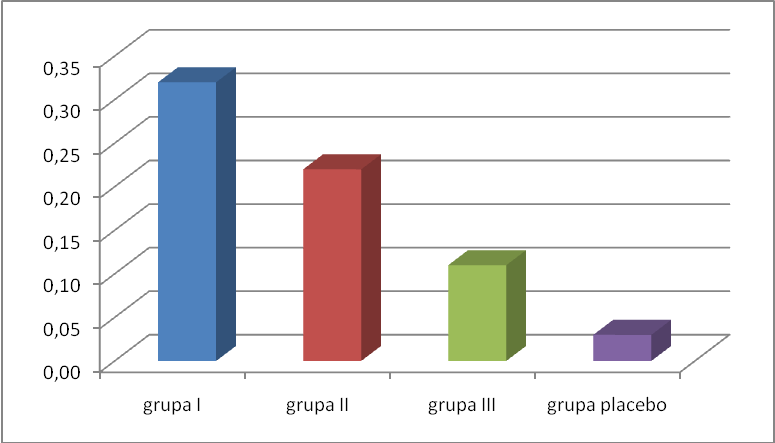
Fig. 7. Mean temperature change in all study groups and the placebo group 15 cm above the knee joint, over the rectus femoris muscle.
The difference between the mean temperature changes of the individual study groups
and the placebo group was analysed – [o C], as illustrated in Figs. 8, 9, 10.
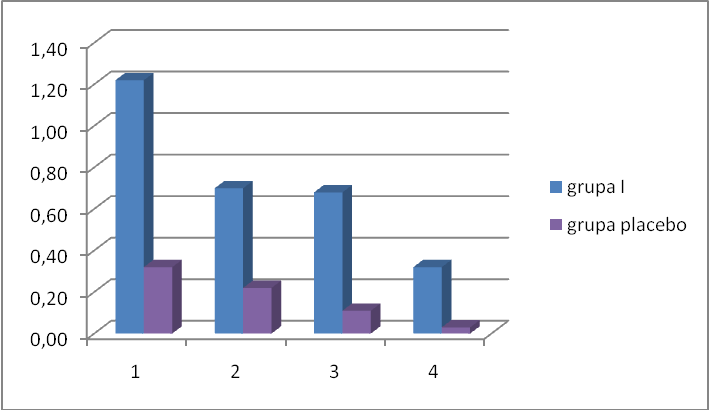
Fig. 8. Comparison of mean temperature changes at the individual measurement points of study group I
with the placebo group.
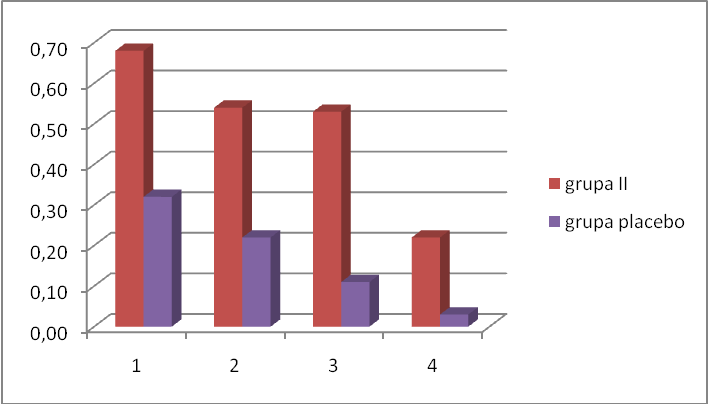
Fig. 9. Comparison of mean temperature changes at the individual measurement points of study group II
with the placebo group.
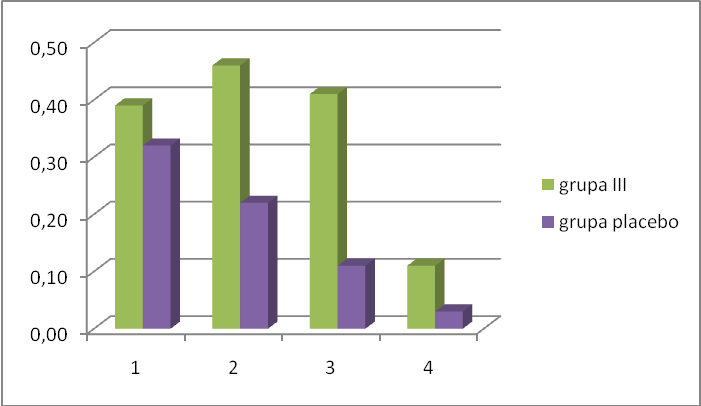
Fig. 10. Comparison of mean temperature changes at the individual measurement points of study group III
with the placebo group.
Discussion
As the measurements presented above show, wearing heat-shielding thermal foot insoles for 30–40 minutes raised the skin surface temperature on the foot, lower leg and above the knee. Owing to properly functioning thermoregulation mechanisms, these changes were naturally greatest among healthy people. Even such a short period of use raised the temperature, especially on the foot, then on the lower leg and least on the thigh. With longer use during the day, these changes would probably be more pronounced.
In people in whom no subjective feeling of warmth could be established – patients after spinal cord injury with sensory disorders – a comparable rise in skin temperature was also observed. Due to abnormal innervation of the microcirculation vessels in the feet, these changes were smaller. Nevertheless, the insoles are effective in this group of patients as well.
Patients with peripheral circulation disorders caused by diabetes and peripheral atherosclerosis reported the most subjective sensations. Despite damage to the microcirculation in the lower limbs, a temperature increase was also recorded in this group – smaller on the feet, greater on the lower legs – probably because thermoregulation mechanisms work more efficiently at the level of the lower leg. These patients mainly reported a feeling of „warm feet. The sensations were more pronounced when they wore the insoles for longer. In this group of patients, it is recommended to extend the time the insoles are worn.
It is known that a weak, long-acting thermal stimulus causes dilation of blood vessels – arterioles, capillaries and veins of the skin and subcutaneous tissue – and the opening of capillaries that are inactive at normal temperature. These changes cause a significant increase in blood supply to the skin. Diffusion through the capillary walls increases and metabolism improves. This stimulates the parasympathetic part of the nervous system, which influences the functioning of internal organs and the cardiorespiratory system, and also gives a sense of well-being and relaxation. A small amount of supplied heat stimulates immune responses, too much inhibits them. The sudden application of a large dose of heat initially leads to the opposite reaction – constriction of blood vessels, due to thermoregulation [1].
These changes depend on the intensity of the stimulus, its duration, the dynamics of its action, individual characteristics and comorbidities.
In the case of thermal insoles, the stimulus is long-lasting and of low intensity. An additional element of the insoles' action is their effect on the receptors of the feet, which in Chinese medicine are considered biologically active points connected to the channels through which vital energy circulates. These channels connect our largest organ – the skin – with the inside of the body [3]. This, and the effect of the thermal stimulus through the sympathetic system, probably explains the positive effects of thermal foot insoles described by Russian researchers in various diseases – diabetes and bronchial asthma (research by Prof. Danilov of Minsk) [4].
Our results are comparable with Mazanik's research in patients with circulatory disorders in the lower limbs.
Conclusions
After analysing the collected material, the following conclusions were drawn:
- The use of thermal insoles raises skin temperature on the foot, lower leg and thigh compared with the placebo group.
- The greatest increase was observed in the group of healthy volunteers without circulatory disorders in the lower limbs.
- A smaller increase was recorded in patients after spinal cord injury, and this increase was proportional to group I.
- In patients with impaired circulation in the lower limbs, the temperature increase on the lower leg was greater than on the foot, probably because of more advanced changes in the feet. This would point to a reflex thermoregulation mechanism after using the insoles.
- The strongest subjective effect of „warm feet” was reported by patients with impaired microcirculation due to diabetes.
- In patients with peripheral circulation disorders, the period of use should be extended to achieve results similar to those in the healthy group.
References
- Straburzyński G, Straburzyńska-Lupa A: Medycyna Fizykalna. Wydawnictwo Lekarskie PZWL, Warszawa 1997, 2000.
- Expert report of the Laboratory of Biotronics and Electrophotography, PTP branch in Kielce, 1994.
- Garnuszewski Z: Renesans akupunktury. Wyd. Sport i Turystyka, Warszawa 1988.
- Daniłow IP: Issliedowania promienienia stimuliatorow PIOKAL pri bronchialnoj astmie, arytmiach i diabeticzeskoj stopie. Research Institute of Haematology and Transfusiology, Minsk 1996.
- Mazanik L, Martynowicz A A, Slipczenko EG: Wlijanie bioenergotiermiczeskich wkładiszei PIOKAL na termograficzeskie pokazateli cton pri kosudistych zabolewaniach niższych koniecznostiei. Medicina. 2002,3: 33-35.